
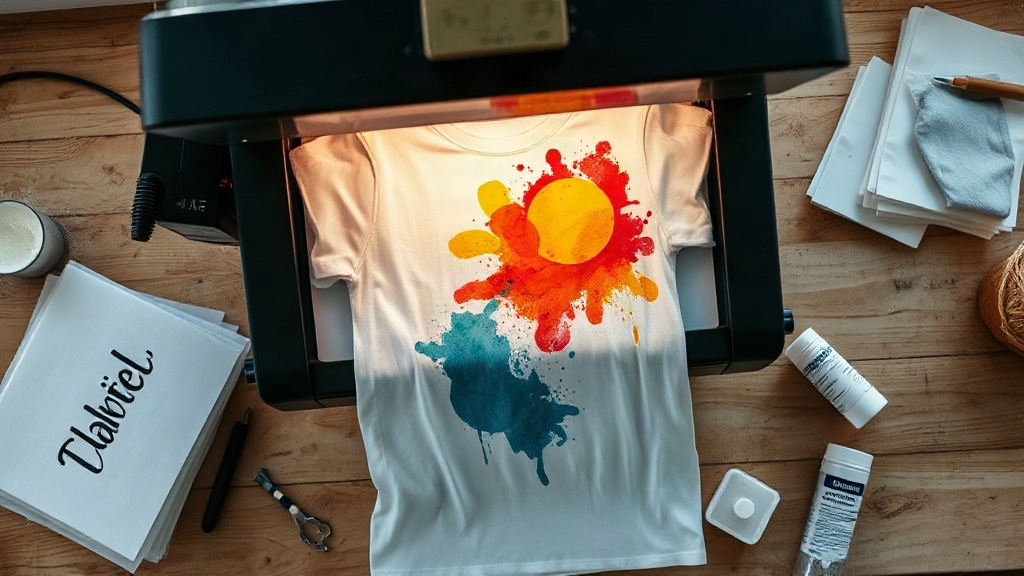
The first time I pressed a DTF transfer onto a cotton tee, I did what most people do: I set the heat press too hot, peeled the film too fast, and watched a corner of the design lift off the shirt. That shirt still hangs in my shop as a reminder. Two years and a few thousand prints later, DTF has become the most requested decoration method in my workflow, and the learning curve turned out to be shorter than I expected once I understood why each step matters.
What DTF Actually Is (And What It Isn't)
DTF stands for direct to film. A printer lays your design onto a special PET film using water-based pigment inks, then a powder adhesive is applied over the wet ink and cured. What you end up with is a flexible, transferable decal that can be pressed onto almost any fabric. Unlike DTG, which prints directly onto the garment, DTF is printed first and applied second. That single difference changes everything about how you work.
It is not vinyl. It is not sublimation. And it is definitely not a magic button that turns any image into a perfect print. The people who get frustrated with DTF are usually the ones who treat it like a sticker. It behaves more like a thin layer of elastic paint that has to bond with the fabric under controlled heat and pressure.
Why It Gained Traction So Quickly
Three practical reasons keep coming up in conversations with other shop owners. First, no weeding. Anyone who has spent an evening picking tiny letters out of heat transfer vinyl understands the appeal. Second, it works on cotton, polyester, blends, and even some canvas and denim, which means one process covers most of your catalog. Third, small runs make financial sense. You can print one design or fifty without cutting a screen or reloading a platen.
Preparing Artwork So the Transfer Holds Up
The artwork decisions you make before printing decide how the transfer feels and lasts. A few habits I picked up early saved me a lot of reprints.
- Keep fine lines at least 1 point thick. Hairline strokes tend to break apart during pressing.
- Avoid large solid blocks of dark ink on stretchy fabrics; they can crack at the edges over time.
- Leave a small margin around the design so the adhesive edge has something to grab.
- Mirror nothing. DTF films are printed in the correct orientation, unlike some other transfer types.
- Set your file to the final print size before output. Scaling after the fact softens detail.
Color management deserves its own moment. Pigment inks on film look dull before pressing, and the powder layer makes everything a little hazy. Do not panic and start boosting saturation. Press a test piece first, because the colors deepen noticeably once the adhesive melts into the fabric.
Pressing Settings That Actually Work
Every press runs a little differently, so treat any number you read online as a starting point, not gospel. That said, the range below has served me well across cotton, poly, and 50/50 blends.
Temperature, Pressure, and Time
- Preheat the garment for a few seconds to drive out moisture. Damp fabric is the quiet enemy of adhesion.
- Set the press to roughly 300 to 320 degrees Fahrenheit for most fabrics.
- Use medium to firm pressure. Light pressure leaves the adhesive sitting on top instead of bonding.
- Press for 10 to 15 seconds, then let the piece cool before peeling.
- If the design still feels loose, press again for 5 seconds with a cover sheet.
Cool peel versus hot peel is the question I get most often. Most modern DTF films are designed for cool peel, and waiting those extra seconds makes a real difference. Peeling hot is how you stretch the ink and leave thin spots behind.
Polyester Needs a Gentler Hand
High heat can scorch polyester or cause dye migration, where the garment's color bleeds up into your print. Lower the temperature slightly, shorten the dwell time, and consider a barrier layer if you are working with reds, navies, or dark greens. This is one of those details that separates a print that looks good on day one from one that still looks good after twenty washes.
The Mistakes I See Most Often
After helping a handful of local printers set up their own DTF stations, the same problems keep surfacing. None of them are complicated to fix.
- Under-curing the powder. If it looks grainy or feels sandy, it needed more time under heat.
- Pressing on a wrinkled shirt. Wrinkles become permanent creases in the transfer.
- Reusing a cover sheet until it is stained. Contamination transfers straight onto your print.
- Storing film in a humid room. Moisture ruins the adhesive layer quietly.
- Peeling before the garment cools, then blaming the film when edges lift.
Each of these has a cheap fix. A timer, a lint roller, a stack of fresh cover sheets, and a sealed storage bin will solve most of them.
How DTF Holds Up in the Real World
Customers ask about durability before almost anything else. In my experience, a properly pressed DTF transfer on cotton survives dozens of wash cycles without noticeable fading, as long as the garment is washed inside out in cold water and dried on low heat. Stretch is where the material shines. Because the ink layer stays flexible, it moves with the fabric instead of fighting it, which is why it works so well on performance wear and fitted tees.
It will not outlast a screen print on a heavy work shirt, and it is not the right answer for every job. Knowing when to reach for it is part of getting good at it.
Frequently Asked Questions
Can I use DTF transfers on 100% polyester?
Yes, and it is one of the better methods for polyester because it does not require the fabric to absorb ink. Lower your press temperature, shorten the time, and watch for dye migration on darker colors.
How long should I wait before washing a DTF shirt?
Give it at least 24 hours so the adhesive fully settles. After that, wash inside out in cold water and avoid high heat in the dryer.
Do I need a special printer to make DTF transfers?
You need a printer loaded with pigment inks and a powder shaker or a manual powdering setup. Many people start by ordering transfers from a supplier before investing in their own equipment.
Why did my DTF transfer peel off after the first wash?
In most cases it comes down to three things: not enough pressure, not enough time, or moisture in the garment during pressing. Preheat the fabric and press again with firmer settings.
Is DTF more expensive than vinyl?
For single-color simple designs, vinyl can be cheaper. For full-color artwork or small runs of complex designs, DTF usually wins on both time and material cost.